Cold Plasma for Inducing Plant Defence Responses against Insect Herbivores
Cold plasma, a non-thermal ionised gas rich in reactive oxygen and nitrogen species, has emerged as a promising technology for activating plant defence responses against insect herbivores. This review summarises the physiological and biochemical mechanisms underlying plasma-induced resistance and the case for plasma-based sustainable crop protection. Read more …

Insect herbivores cause substantial crop losses worldwide, necessitating sustainable alternatives to chemical insecticides. Cold plasma, a non-thermal ionised gas rich in reactive oxygen and nitrogen species (ROS/RNS), has emerged as a promising technology for stimulating plant growth, improving stress tolerance, and activating defence responses without thermal damage. This review summarises the mechanisms by which cold plasma enhances plant resistance against insect herbivores through oxidative signalling, activation of antioxidant systems, regulation of phytohormone-mediated defence pathways, and induction of defence-related metabolites and enzymes, including phenolics, flavonoids, phenylalanine ammonia-lyase, polyphenol oxidase, lipoxygenase, superoxide dismutase, catalase, and peroxidases. It also discusses plasma-induced structural modifications and the limited but growing evidence of reduced insect performance on plasma-treated plants. Although current findings indicate enhanced plant defensive capacity through coordinated physiological and biochemical reprogramming, direct evidence remains limited. Future molecular and field studies are essential to optimise plasma-based sustainable crop protection.
Cold plasma, Plant defence, Insect herbivores, Reactive oxygen species (ROS), Reactive nitrogen species (RNS), Antioxidant enzymes
1 Introduction
Insect herbivores are among the most significant biotic constraints limiting agricultural productivity and ecosystem stability worldwide. Feeding by herbivorous insects disrupts plant growth, reduces photosynthetic efficiency, compromises crop quality, and results in substantial yield losses in numerous economically important crops (Gatehouse 2002; War et al. 2012). Beyond their direct impact on crop production, insect herbivores play a crucial ecological role by shaping plant community dynamics, influencing nutrient cycling, and driving the evolution of complex plant defence mechanisms through long-term plant–insect interactions (Gatehouse 2002; Schoonhoven et al. 2005). Globally, insect pests cause significant pre- and post-harvest crop losses, posing a major challenge to food security and sustainable agriculture (Oerke 2006; Savary et al. 2019). Insect pests account for an estimated 18% of the global loss potential in major food and cash crops, and current crop protection practices prevent only about 39% of this potential loss (Oerke 2006). Expert assessments of wheat, rice, maize, potato and soybean place actual losses to pests and pathogens at roughly 17–30% of attainable yield, with the heaviest burden falling on food-deficit regions (Savary et al. 2019). Furthermore, climate change is expected to intensify insect herbivory by altering pest distribution, abundance, phenology, and feeding behaviour, thereby increasing the frequency and severity of pest outbreaks in many agricultural regions (Bale et al. 2002; Liu et al. 2024; Deutsch et al. 2018). Although chemical insecticides remain the primary means of pest control, their extensive use has resulted in insecticide resistance, environmental contamination, and adverse effects on non-target organisms (War et al. 2012; Sparks and Nauen 2015; Liu et al. 2024). More than 580 arthropod species are now resistant to at least one insecticide (Sparks and Nauen 2015), and the inadvertent destruction of natural enemies by broad-spectrum products frequently triggers pest resurgence and secondary pest outbreaks, so that escalating applications yield diminishing returns (Oerke 2006; Desneux et al. 2007; Guedes et al. 2016). These limitations highlight the urgent need for safer and more sustainable pest management strategies.
In response, considerable research has focused on alternative pest management strategies that can reduce reliance on synthetic insecticides. Many of these approaches are now integrated into integrated pest management (IPM) programmes (Stenberg 2017). These strategies include biological control using predators, parasitoids, and entomopathogenic fungi, bacteria, viruses, and nematodes (Lacey et al. 2015). Botanical and microbial biopesticides, such as azadirachtin, pyrethrum, and Bacillus thuringiensis formulations, are also widely explored (Isman 2020). Other approaches include semiochemical-based methods, such as mating disruption and mass trapping. Host plant resistance is another important strategy and includes both conventionally bred and transgenic insect-resistant cultivars. RNA interference (RNAi) approaches can also be used to silence genes that are essential for insect survival or development (Zhu and Palli 2020). Physical and mechanical methods, including barriers, particle films, inert dusts, and thermal treatments, provide additional options (Vincent et al. 2003). These approaches generally offer ecological advantages over broad-spectrum insecticides. However, their practical adoption can be limited by several factors. These include narrow target ranges, inconsistent field performance, slow action, high production or regulatory costs, and potential damage to heat-sensitive plant tissues in the case of thermal treatments.
Among the physical approaches, non-thermal techniques have recently attracted particular attention because they operate at or near ambient temperature and therefore avoid the tissue damage and quality loss associated with heat-based methods (Vincent et al. 2003; Chizoba Ekezie et al. 2017). Ultraviolet-C irradiation, pulsed electric fields, ultrasound and ionising radiation have all been evaluated for seed treatment, surface decontamination and quality preservation in agricultural and food systems. Of these non-thermal options, cold plasma has become the most versatile and rapidly advancing, since a single short exposure can decontaminate plant surfaces, modify seed and leaf properties, and elicit physiological and biochemical responses within the treated plant (Misra et al. 2016; Chizoba Ekezie et al. 2017; Pańka et al. 2022).
Cold plasma has emerged as an innovative and environmentally friendly technology with considerable potential for advancing sustainable agriculture. Often referred to as non-thermal or cold atmospheric plasma (CAP), it is a partially ionised gas containing a mixture of electrons, ions, ROS/RNS, neutral particles, free radicals, and ultraviolet photons (Bourke et al. 2017; Dilip et al. 2026). Unlike thermal plasma, cold plasma operates at or near ambient temperature, making it suitable for treating heat-sensitive biological materials such as seeds, living plants, etc., without causing thermal injury (Misra et al. 2016; Lin et al. 2022). The unique ability of cold plasma to generate reactive species that influence biological processes has spurred the development of plasma agriculture, an emerging multidisciplinary field that integrates plasma physics, plant science, and agricultural technology to improve crop production and resilience (Attri et al. 2020; Pańka et al. 2022). Initially, research focused on its effectiveness in seed surface sterilisation and microbial decontamination; however, its applications have expanded considerably in recent years. Current studies demonstrate that cold plasma can enhance seed germination and vigour, stimulate plant growth, improve nutrient uptake, increase tolerance to biotic and abiotic stresses, suppress plant pathogens, generate plasma-activated water (PAW) for agricultural use, and induce plant defence mechanisms that improve resistance against insect herbivores (Lin et al. 2022; Dilip, Modupalli, Rahman, et al. 2025). Cold plasma is also applied directly against stored-product insects, where it offers a residue-free alternative to chemical fumigants. Direct exposure of Tribolium castaneum infesting wheat achieved 95–100% mortality of eggs, larvae and pupae within seconds, with mortality accompanied by reduced respiration rate and elevated oxidative stress markers in the insects, although adults required longer treatment (Ziuzina et al. 2021). Likewise, plasma-treated chickpea remained largely free of Callosobruchus chinensis damage throughout four years of storage, whereas untreated grain was heavily infested within the first quarter of the storage period (Pathan et al. 2021). The growing need for sustainable and environmentally responsible crop protection strategies has intensified interest in cold plasma as an innovative technology for improving plant defence.
2 Literature search strategy
As a narrative rather than a systematic review, this article does not follow a pre-registered protocol; nevertheless, a structured approach was used to identify the relevant literature, reported here for transparency as recommended even for narrative reviews. The Web of Science Core Collection, Scopus and PubMed were searched for peer-reviewed articles, supplemented by Google Scholar to capture very recent or grey literature, covering the period from the early 2010s, when plasma agriculture emerged as a distinct research area, to mid-2026. Search terms combined a plasma-related keyword (“cold plasma”, “non-thermal plasma”, “cold atmospheric plasma”, “dielectric barrier discharge”, or “plasma-activated water”) with a plant- or insect-related keyword (“plant defence”, “insect herbivor*”, “herbivory”, “insect resistance”, “insect pest”, “antioxidant enzyme”, “phenylpropanoid”, or the name of a specific defence-related enzyme such as phenylalanine ammonia-lyase, polyphenol oxidase or lipoxygenase), combined with Boolean operators and adapted to the syntax of each database. The reference lists of retrieved articles and of recent reviews of plasma agriculture (e.g., (Priatama et al. 2022; Konchekov et al. 2023)) were hand-searched to identify further eligible studies. Primary research and review articles were included if they reported original data or synthesis on the effects of cold plasma, plasma-activated water, or plasma-treated seed on plant physiology, biochemistry, or morphology in a context relevant to defence against insects, or if they directly measured insect, or in one case mite, performance or behaviour on plasma-treated plants; non-English-language records, conference abstracts without an accompanying full text, and studies addressing only plasma’s antimicrobial or food-safety applications with no plant-defence or plant-growth endpoint were excluded. Wherever a proposed mechanism is discussed by analogy with the general plant-defence literature rather than being drawn from a cold-plasma-specific study, this is stated explicitly in the text.
3 Concept of cold plasma
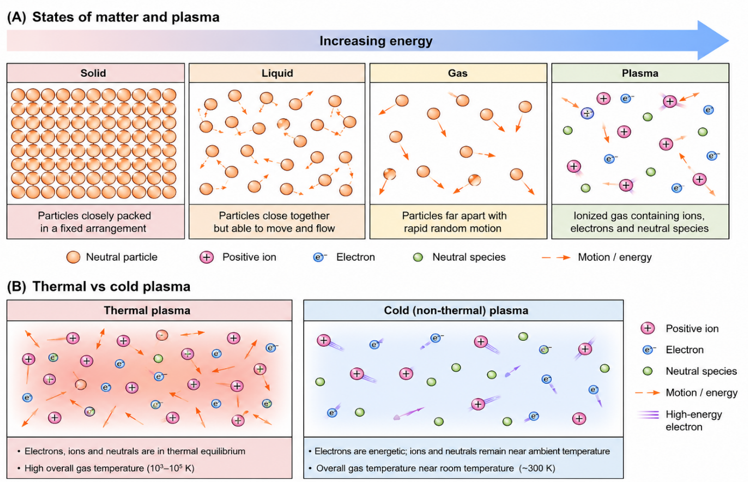
Plasma is widely regarded as the fourth state of matter, in addition to solids, liquids, and gases. It is formed when a gas receives sufficient energy to undergo ionisation, producing a quasi-neutral mixture of electrons, ions, neutral atoms and molecules, excited particles, free radicals, and photons (Fridman 2008; Lu et al. 2016). Depending on the thermal equilibrium between electrons and heavier particles, plasma is generally categorised into thermal and non-thermal plasma (Tendero et al. 2006; Misra et al. 2016). In thermal plasma, all constituent particles exist at nearly the same elevated temperature, which restricts its use in biological applications due to the risk of heat-induced damage (Graves 2014; Bourke et al. 2017). On the other hand, non-thermal, or cold plasma, contains highly energetic electrons while maintaining the surrounding gas at or near room temperature (Figure 1). This allows it to interact safely with biological materials without causing significant thermal injury (Fridman 2008; Tendero et al. 2006; Domonkos et al. 2021). Owing to these distinctive physical and chemical characteristics, cold plasma has emerged as a promising technology in agriculture. It is increasingly being explored as a non-invasive approach to enhance plant growth, improve crop health, and strengthen tolerance to various environmental stresses (Adhikari et al. 2020; Misra et al. 2016).
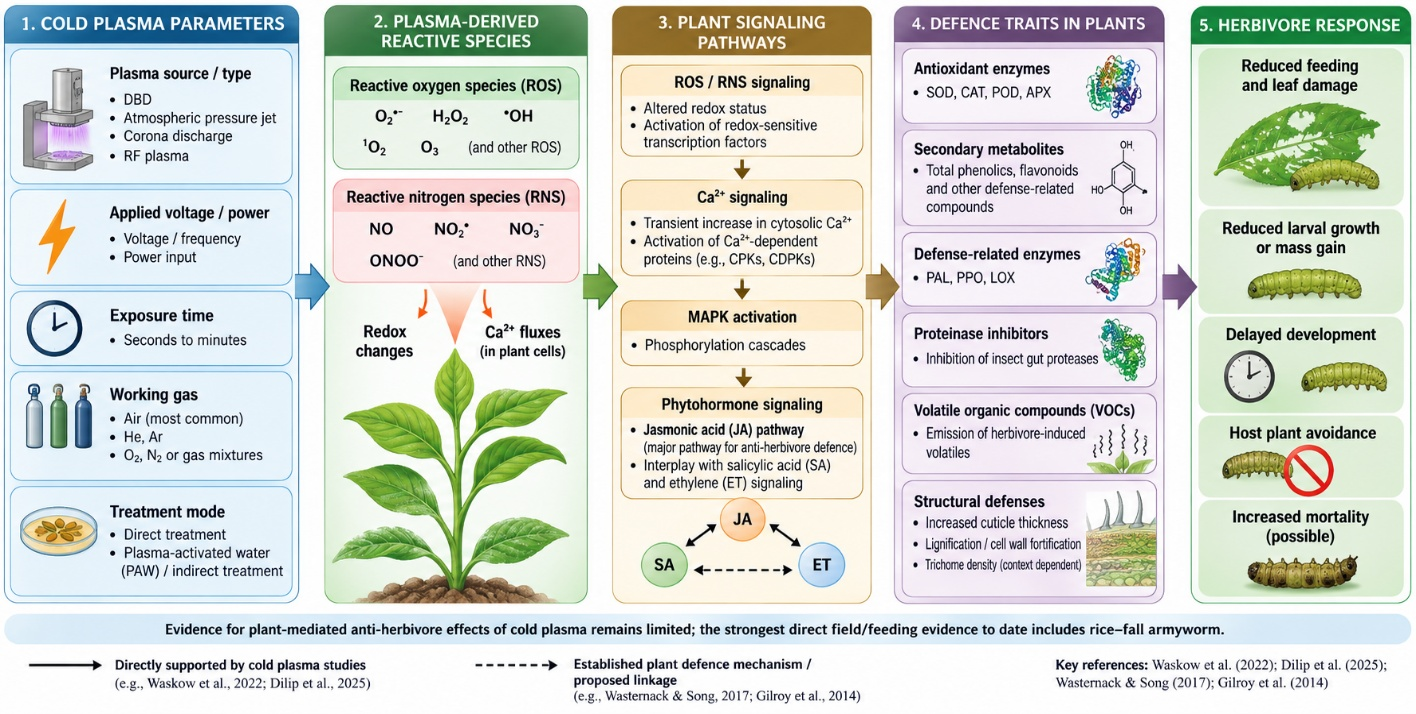
A variety of cold plasma systems have been developed for agricultural applications, with each system differing in its plasma generation method, operating conditions, and treatment efficiency. Among these, Dielectric Barrier Discharge (DBD) is the most widely investigated due to its ability to generate stable and uniform plasma at atmospheric pressure (Table 1). Its effectiveness in seed treatment, modification of plant surfaces, and production of plasma-activated water has made it one of the most commonly used plasma technologies in agriculture (Misra et al. 2016; Adhikari et al. 2020). Atmospheric Pressure Plasma Jet (APPJ) produces a focused plasma plume that enables accurate and localised treatment of seeds, leaves, and other plant tissues while reducing the risk of physical injury (Matsusaka 2019). Another commonly used system, corona discharge plasma, is generated by applying a high-voltage electric field between asymmetric electrodes. It has been effectively employed for seed sterilisation, microbial decontamination, and improving seed germination. But the plasma it generates is generally less uniform than that produced by DBD systems (Domonkos et al. 2021). Radiofrequency (RF) plasma operates using alternating electromagnetic fields to sustain low-temperature plasma and provides precise control over plasma chemistry, making it well suited for laboratory investigations as well as advanced agricultural applications (Tendero et al. 2006; Filatova et al. 2011). The selection of an appropriate plasma source ultimately depends on several factors, including the crop species, the intended treatment purpose, exposure time, the composition of the working gas, and the specific biological response.
The composition of the working gas is a critical determinant of the physicochemical properties of cold plasma and the types of reactive species generated during plasma discharge. Atmospheric air is the most widely used working gas in agricultural applications because of its low cost, easy availability, and ability to simultaneously generate ROS and RNS, which are essential for plasma-induced biological responses in plants (Waskow et al. 2022; Dilip et al. 2026). Noble gases such as helium (He) and argon (Ar), as well as molecular gases including nitrogen (N2) and oxygen (O2), are also commonly employed either individually or in combination depending on the plasma source and intended application (Pańka et al. 2022). Helium and argon produce stable and homogeneous plasma discharges with low breakdown voltages, whereas oxygen- and nitrogen-containing gases favour the generation of ROS and RNS, respectively, thereby influencing plasma chemistry and the subsequent physiological and defence responses of plants (Waskow et al. 2022; Graves 2014).
| Plasma system | Principle of operation | Operating conditions | Major reactive species generated | Advantages | Limitations | Major agricultural applications |
|---|---|---|---|---|---|---|
| Dielectric Barrier Discharge (DBD) | Plasma is generated between two electrodes separated by one or two dielectric barriers (glass, quartz or ceramic), preventing arc formation. | Atmospheric pressure; high AC or pulsed voltage; air, O2, N2, Ar or He. | ROS (O, O3, OH•, H2O2), RNS (NO, NO2, NO3⁻), UV photons. | Uniform treatment, low operating temperature, inexpensive, scalable, suitable for large-area treatment. | Mainly surface treatment; plasma penetration is limited. | Seed priming, seed decontamination, plasma-activated water (PAW), pathogen control, growth promotion, stress tolerance enhancement. |
| Atmospheric Pressure Plasma Jet (APPJ) | Plasma is generated inside a discharge tube and expelled as a directed plasma plume using a carrier gas. | Atmospheric pressure; Ar or He commonly used with small additions of O2 or N2. | ROS, RNS, excited atoms, metastables, UV radiation. | Localised treatment, precise application, high reactive species delivery, suitable for delicate tissues. | Limited treatment area; requires continuous gas supply; relatively expensive. | Localised treatment of seeds, seedlings, leaves and fruits; targeted pathogen control; physiological studies. |
| Corona Discharge (CD) | Plasma is produced by electrical discharge around a sharp electrode under a strong non-uniform electric field. | Atmospheric pressure; DC, AC or pulsed high voltage; usually air. | Ozone, ROS, RNS, charged particles. | Simple design, low cost, low energy consumption, easy operation. | Non-uniform plasma distribution; lower treatment uniformity; risk of localised heating at high voltages. | Seed surface sterilisation, surface modification, microbial inactivation, ozone generation. |
| Radio Frequency (RF) Plasma | Plasma is generated by alternating electromagnetic fields, commonly at 13.56 MHz, producing capacitively or inductively coupled discharges. | Usually low pressure, although atmospheric RF systems also exist; Ar, He, O2 or air. | ROS, RNS, ions, radicals, UV photons. | Stable plasma, highly controllable discharge, uniform treatment. | Higher equipment cost; often requires vacuum systems for low-pressure operation. | Surface modification, seed treatment, postharvest decontamination, plasma-activated liquids, research applications. |
The biological effects of cold plasma are largely attributed to the diverse range of reactive species produced during the ionisation of gases. These include ROS, such as hydroxyl radicals (OH), superoxide anions (O2⁻), singlet oxygen (1O2), ozone (O3), and hydrogen peroxide (H2O2), as well as RNS, including nitric oxide (NO), nitrogen dioxide (NO2), nitrite (NO2⁻), nitrate (NO3⁻), and peroxynitrite (ONOO⁻). In addition to these chemically reactive molecules, cold plasma also generates ultraviolet (UV) radiation, charged particles, metastable atoms, and transient electric fields, all of which contribute to its biological activity (Graves 2014; Misra et al. 2016; Domonkos et al. 2021). Among the various plasma-generated components, ROS and RNS are considered the primary drivers of plasma-induced biological responses. They act as important signalling molecules that help maintain cellular redox balance, stimulate antioxidant defence mechanisms, regulate phytohormone-mediated signalling pathways, and trigger the expression of genes associated with stress adaptation and plant defence. Through these coordinated responses, reactive species play a key role in promoting plant growth, enhancing tolerance to abiotic stresses, and strengthening resistance against plant pathogens and insect herbivores (Adhikari et al. 2020; Bafoil et al. 2018; Lin et al. 2022).
4 Plant defence against insect herbivores
Throughout their life cycle, plants are exposed to continuous attack by insect herbivores, leading to substantial reductions in growth, reproductive success, and agricultural productivity worldwide (Schoonhoven et al. 2005; Erb and Reymond 2019). As sessile organisms, plants cannot evade herbivore attack and have consequently evolved sophisticated defence systems that enable them to recognise herbivore-associated signals and initiate appropriate protective responses (Howe and Jander 2008). These defence strategies are broadly categorised into constitutive and induced mechanisms, which function in a complementary manner to limit herbivore damage while optimising the metabolic costs associated with defence (Karban and Baldwin 2007a; Kessler and Baldwin 2002). Constitutive defences are pre-existing barriers that provide continuous protection against potential herbivores, whereas induced defences are activated only after herbivore attack or perception, allowing plants to allocate defensive resources more efficiently in response to changing environmental conditions (Fürstenberg-Hägg et al. 2013; War et al. 2012). Together, these integrated defence mechanisms enable plants to counter a diverse range of insect feeding guilds, including chewing, piercing–sucking, leaf-mining, and gall-forming herbivores, thereby contributing to their survival and fitness under natural and agricultural ecosystems (Mithöfer and Boland 2012).
4.1 Constitutive defences
Constitutive defences represent the first line of protection against insect herbivores by providing plants with pre-existing structural and chemical barriers that reduce herbivore establishment, feeding, and survival (Karban and Baldwin 2007b). Structural defences play a crucial role in limiting insect attack. These include trichomes, which obstruct movement and oviposition; thickened cuticles and epicuticular waxes, which impede attachment and stylet penetration; lignified and silicified cell walls, which raise tissue toughness and lower digestibility; spines, thorns and hardened sclerenchyma, which physically deter feeding; and traits such as dense pubescence and high leaf toughness, which slow larval growth and prolong development (Levin 1973; Eigenbrode and Espelie 1995; War et al. 2012; Fürstenberg-Hägg et al. 2013; Miedes et al. 2014). Among these, trichomes are particularly effective as they impede insect movement, interfere with oviposition, reduce feeding efficiency, and, in the case of glandular trichomes, release sticky or toxic secretions that further deter herbivores (Levin 1973; Glas et al. 2012). Likewise, a thick cuticle and epicuticular waxes hinder insect attachment and impede stylet penetration by piercing–sucking insects, thereby lowering feeding success (Eigenbrode and Espelie 1995). Cell wall lignification further strengthens plant tissues by increasing their mechanical rigidity and reducing digestibility, making them less susceptible to damage caused by herbivore feeding (Miedes et al. 2014).
In addition to these physical barriers, plants constitutively accumulate a wide array of secondary metabolites that contribute to defence against herbivores. Phenolic compounds, flavonoids and tannins, impair insect performance by reducing nutrient availability and inhibiting digestive enzymes (Lattanzio et al. 2006). Alkaloids, such as nicotine and quinolizidine alkaloids, act as potent feeding deterrents and neurotoxins, disrupting normal physiological functions in insects (Wink 2003). Terpenoids also play diverse defensive roles, functioning as toxins, repellents, and feeding deterrents, while serving as precursors for volatile compounds involved in indirect plant defence (Gershenzon and Dudareva 2007a). The composition and abundance of these constitutive defence traits differ considerably among plant species, reflecting their evolutionary adaptation to persistent herbivore pressure and long-term plant–insect coevolution (Bennett and Wallsgrove 1994a).
4.2 Induced defences
In contrast to constitutive defences, induced defences are activated only after plants detect herbivore attack, allowing resources to be allocated efficiently while ensuring a rapid and effective defensive response when needed (Karban and Myers 1989). Herbivore feeding initiates the perception of herbivore-associated molecular patterns (HAMPs), triggering a cascade of early signalling events that includes calcium influx, the generation of reactive oxygen species (ROS), and activation of mitogen-activated protein kinase (MAPK) pathways. These signalling networks ultimately regulate the expression of defence-related genes and coordinate downstream defence responses (Maffei et al. 2007; Bigeard et al. 2015).
One of the major outcomes of induced defence is the accumulation of compounds that directly impair herbivore growth and survival. Proteinase inhibitors disrupt digestive proteases in the insect gut, thereby reducing nutrient utilisation and insect performance (Ryan 1990). Likewise, polyphenol oxidases (PPOs) catalyse the oxidation of phenolic compounds into reactive quinones, which decrease protein digestibility and act as feeding deterrents (Constabel and Ryan 1998). Herbivory also promotes the biosynthesis of toxic secondary metabolites and activates key defence-related enzymes, including phenylalanine ammonia-lyase and lipoxygenase, further strengthening plant resistance to insect attack (Chen 2008).
Beyond these direct defensive measures, plants employ indirect defence strategies by emitting herbivore-induced plant volatiles (HIPVs). These volatile compounds serve as chemical signals that attract predators and parasitoids of herbivorous insects, thereby enhancing natural biological control through tritrophic interactions (Arimura et al. 2009; Turlings and Erb 2018). The activation of both direct and indirect defences is predominantly coordinated by the jasmonic acid (JA) signalling pathway, which regulates defence gene expression, secondary metabolite biosynthesis, and volatile emission. Crosstalk between JA and other phytohormone signalling pathways, particularly those involving salicylic acid (SA) and ethylene (ET), further fine-tunes plant defence responses according to the feeding strategy of the attacking herbivore (Wasternack and Song 2017a; Pieterse et al. 2012; Howe and Jander 2008).
5 Cold plasma as an elicitor of plant defence
5.1 Plasma-induced oxidative burst
One of the earliest and most important physiological responses of plants to cold plasma treatment is the rapid induction of an oxidative burst, characterised by the transient accumulation of reactive oxygen species (ROS) and reactive nitrogen species (RNS). Although excessive concentrations of these reactive molecules can damage cellular components, their controlled production at low or moderate levels functions as an essential signalling mechanism that regulates plant growth, stress adaptation, and defence responses (Baxter et al. 2014; Mittler 2017). During cold plasma exposure, reactive species are generated both in the plasma phase and at the plasma–plant interface (Table 2). These species subsequently interact with the plant surface and surrounding moisture, initiating intracellular redox signalling pathways that influence plant physiology without causing thermal injury (Misra et al. 2016; Priatama et al. 2022).
5.1.1 Generation of Reactive Oxygen Species (ROS)
Cold atmospheric plasma generates a diverse array of ROS, including superoxide anion (O2•⁻), hydroxyl radicals (•OH), hydrogen peroxide (H2O2), singlet oxygen (1O2), and ozone (O3). The composition and abundance of these reactive species are influenced by factors such as the plasma source, working gas, applied voltage, and exposure time (Graves 2014; Lu et al. 2016). When plasma comes into contact with plant tissues, the generated ROS may either diffuse into the outer tissue layers or stimulate the plant’s own ROS production by activating membrane-associated NADPH oxidases and apoplastic peroxidases. This dual mode of ROS generation enhances intracellular redox signalling and initiates downstream physiological responses (Song et al. 2020; Priatama et al. 2022).
Among the different ROS, hydrogen peroxide (H2O2) has emerged as a central signalling molecule owing to its relatively long half-life, greater stability, and ability to move across cellular membranes through aquaporin channels (Mittler 2017). Beyond its well-known role as an oxidising agent, H2O2 participates in the regulation of several physiological processes, including the activation of antioxidant enzymes, induction of defence-related genes, reinforcement of the cell wall, and modulation of phytohormone signalling pathways (Fichman and Mittler 2020a). The defence-related genes induced under elevated H2O2 levels typically include genes encoding pathogenesis-related (PR) proteins such as PR1, chitinases and \(β\)-1,3-glucanases; phenylpropanoid-associated enzymes such as phenylalanine ammonia-lyase (PAL) and chalcone synthase (CHS); wound- and herbivory-responsive enzymes such as lipoxygenase (LOX) and polyphenol oxidase (PPO), as well as proteinase inhibitors (PIN); antioxidant enzymes such as superoxide dismutase (SOD), catalase (CAT) and ascorbate peroxidase (APX); and redox-responsive transcription factors belonging to the WRKY and MYB families, which coordinate downstream defence responses. (Bigeard et al. 2015; Waszczak et al. 2018). Experimental studies have consistently shown that plasma-treated seeds and seedlings exhibit a transient increase in H2O2 levels soon after treatment. This is followed by enhanced activities of antioxidant enzymes such as superoxide dismutase (SOD), catalase (CAT), and various peroxidases, suggesting that cold plasma elicits a tightly regulated oxidative response rather than causing permanent oxidative damage (Adhikari et al. 2020; Song et al. 2020).
Superoxide anion (O2•⁻) is another important ROS formed during plasma exposure. Despite its short lifespan and high reactivity, it plays a significant role in redox signalling by serving as the primary precursor of H2O2 through the catalytic action of superoxide dismutase, thereby contributing to the maintenance of intracellular redox homeostasis (Baxter et al. 2014). Hydroxyl radicals (•OH), in contrast, possess one of the highest oxidation potentials among ROS and readily react with proteins, lipids, nucleic acids, and cell wall constituents. At controlled concentrations, these reactions can facilitate cell wall remodelling and activate stress-related signalling pathways. However, excessive accumulation of hydroxyl radicals can result in oxidative damage to cellular components (Graves 2014; Domonkos et al. 2021).
5.1.2 Generation of Reactive Nitrogen Species (RNS)
Alongside ROS, cold plasma also produces a variety of biologically active RNS, including nitric oxide (NO), nitrogen dioxide (NO2), nitrite (NO2⁻), nitrate (NO3⁻), and peroxynitrite (ONOO⁻). The formation of these species is particularly pronounced when atmospheric air or nitrogen-containing gases are employed as the working gas for plasma generation (Machala et al. 2013; Priatama et al. 2022). Following plasma exposure, these RNS readily dissolve in the thin aqueous layer present on plant surfaces or in plasma-activated water, where they undergo a series of chemical transformations that influence plant metabolism and activate defence-related responses (Ranieri et al. 2021).
Among the various RNS, nitric oxide (NO) is recognised as a pivotal signalling molecule involved in regulating several physiological processes, including seed germination, root growth, stomatal movement, and the activation of plant defence mechanisms (Fancy et al. 2017). Nitric oxide also acts in close coordination with ROS, particularly hydrogen peroxide (H2O2), to modulate protein phosphorylation, regulate redox-sensitive transcription factors, and influence antioxidant metabolism, thereby helping to maintain cellular redox homeostasis (Farnese et al. 2016). In addition, plasma-generated nitrite and nitrate can function as supplementary nitrogen sources for plants, supporting plant growth while also participating in signalling pathways associated with defence responses (Priatama et al. 2022).
5.1.3 ROS and RNS as signalling molecules in plant defence
Independently of any plasma treatment, ROS and RNS are central components of the plant signalling machinery. Under normal growth, ROS are generated continuously in chloroplasts, mitochondria, peroxisomes and the apoplast, where plasma membrane-bound NADPH oxidases (respiratory burst oxidase homologues, RBOHs) and cell wall peroxidases produce superoxide and H2O2 in a tightly controlled manner (Apel and Hirt 2004a; Mittler 2017). Their steady-state concentration is set by the balance between production and scavenging through the ascorbate–glutathione cycle and enzymatic antioxidants, so that the same molecules act as signals at low concentrations but become damaging oxidants once this balance is lost (Noctor and Foyer 1998a; Foyer and Noctor 2005a; Gill and Tuteja 2010a). Locally generated ROS can propagate as a self-sustaining ROS wave that travels through the plant and coordinates systemic acclimation to stress (Fichman and Mittler 2020b). Downstream, these species feed into well-defined pathways: ROS trigger calcium influx through plasma membrane channels, activate MAPK cascades, and oxidise redox-sensitive cysteine residues in transcription factors, thereby reprogramming stress- and defence-related gene expression (Baxter et al. 2014; Bigeard et al. 2015; Waszczak et al. 2018). RNS act largely through nitric oxide, which modifies target proteins by S-nitrosylation and tyrosine nitration, cooperates with H2O2 in redox signalling, and modulates the jasmonic acid, salicylic acid and ethylene pathways that govern defence against herbivores and pathogens (Farnese et al. 2016; Fancy et al. 2017). Together, ROS and RNS constitute a shared signalling language that links stress perception to defence activation.
Against this background, the ROS and RNS generated during cold plasma treatment are now recognised not merely as cytotoxic molecules but as important secondary messengers that regulate complex defence signalling networks in plants (Mittler 2017). Their transient accumulation triggers a series of early signalling events, including calcium influx, activation of mitogen-activated protein kinase (MAPK) cascades, modulation of redox-sensitive transcription factors, and induction of defence-related gene expression. Together, these responses enhance the plant’s capacity to respond rapidly and effectively to subsequent biotic and abiotic stresses (Bigeard et al. 2015; Waszczak et al. 2018).
The oxidative burst induced by cold plasma also activates the plant antioxidant defence system. Increased activities of antioxidant enzymes, including superoxide dismutase (SOD), catalase (CAT), ascorbate peroxidase (APX), glutathione reductase (GR), and various class III peroxidases, help re-establish cellular redox homeostasis following the initial rise in ROS levels (Adhikari et al. 2020; Song et al. 2020). At the same time, oxidative signalling promotes the accumulation of phenolic compounds, flavonoids, lignin, and other antioxidant metabolites, which reinforce plant defence and improve tolerance to a range of environmental stresses (Konchekov et al. 2023). Recent studies further indicate that plasma-derived ROS and RNS are closely integrated with phytohormone signalling networks, particularly those involving jasmonic acid, salicylic acid, and ethylene. Through this interaction, the early oxidative burst is translated into downstream defence responses that are proposed to enhance resistance against insect herbivores as well as microbial pathogens (Fichman and Mittler 2020a; Ranieri et al. 2021).
| Category | Reactive species | Relative lifetime | Major biological significance in plants |
|---|---|---|---|
| Reactive Oxygen Species (ROS) | Atomic oxygen (O) | Very short | Strong oxidant involved in surface activation and initiation of redox signalling. |
| Hydroxyl radical (•OH) | Extremely short | Highly reactive oxidant that initiates oxidation reactions and contributes to defence signalling. | |
| Superoxide radical (O2•⁻) | Short | Acts as an early signalling molecule and precursor of hydrogen peroxide through SOD activity. | |
| Singlet oxygen (1O2) | Short | Participates in oxidative signalling and stress responses. | |
| Hydrogen peroxide (H2O2) | Long | Stable signalling molecule regulating defence priming, antioxidant responses, and gene expression. | |
| Ozone (O3) | Long | Strong oxidising agent that modifies seed surfaces and contributes to antimicrobial activity. | |
| Reactive Nitrogen Species (RNS) | Nitric oxide (NO) | Short | Important signalling molecule regulating defence responses, phytohormone signalling, and stress adaptation. |
| Nitrogen dioxide (NO2) | Moderate | Intermediate involved in nitrogen oxide chemistry and signalling. | |
| Nitrite (NO2⁻) | Long | Long-lived nitrogen species participating in nitrogen metabolism and plasma-activated water chemistry. | |
| Nitrate (NO3⁻) | Long | Stable nitrogen source that may contribute to improved plant nutrition and growth. | |
| Peroxynitrite (ONOO⁻) | Short | Reactive oxidant formed from NO and superoxide; involved in redox signalling under stress. | |
| Charged particles | Electrons (e⁻) | Very short | Initiate ionisation and excitation reactions responsible for reactive species generation. |
| Positive and negative ions | Short | Participate in plasma chemistry and surface interactions. | |
| Excited species | Excited oxygen (O2⁺, N2⁺, O⁻, etc.) | Very short | Contributes to ROS formation through energy transfer reactions. |
| Excited nitrogen (N2*) | Very short | Precursor for RNS formation and plasma emission processes. | |
| Radiation | Ultraviolet photons (UV-A, UV-B, UV-C) | Instantaneous | Contributes to surface sterilisation and may induce defence-related signalling in plants under controlled exposure. |
5.2 Cold plasma-induced changes in plant biochemistry
Cold plasma treatment induces a wide range of biochemical changes that play a crucial role in enhancing plant defence and stress tolerance. The transient redox signals generated during plasma exposure stimulate the accumulation of protective metabolites and regulate the activities of antioxidant and defence-related enzymes. This redox signalling is thought to contribute to improved cellular homeostasis and adaptive responses (Priatama et al. 2022). Numerous studies have demonstrated that cold plasma enhances the biosynthesis of phenolic compounds, flavonoids, and other secondary metabolites, while increasing the activities of antioxidant enzymes such as superoxide dismutase, catalase, and peroxidases, as well as defence-associated enzymes including phenylalanine ammonia-lyase, polyphenol oxidase, and lipoxygenase (Song et al. 2020; Konchekov et al. 2023). Two studies illustrate both the magnitude of these changes and their functional consequences. In tomato, seed treatment with 80 W cold plasma caused H2O2 to rise more rapidly and peak about 140% above untreated controls, accompanied by markedly higher peroxidase, polyphenol oxidase and phenylalanine ammonia-lyase activities; these biochemical shifts translated into a 25% reduction in bacterial wilt caused by Ralstonia solanacearum, directly linking plasma-induced priming to improved resistance (Jiang et al. 2014). In a second study, cold atmospheric plasma seed treatment raised leaf flavonoid, phenolic, saponin and tannin contents of tomato seedlings by 38%, 30%, 117% and 94%, respectively, relative to controls, while superoxide dismutase, catalase and peroxidase activities increased by 177%, 137% and 103%, indicating that plasma strengthens the non-enzymatic and enzymatic arms of the defence system simultaneously (Sultan et al. 2024). These coordinated biochemical modifications strengthen the plant’s defensive capacity and provide an important mechanistic basis for enhanced resistance against biotic stresses, including insect herbivory (Karimi et al. 2024).
5.2.1 Accumulation of non-enzymatic defence metabolites
Treatment with cold plasma has been widely reported to influence plant secondary metabolism, leading to the accumulation of several non-enzymatic defence metabolites that play key roles in antioxidant protection and resistance to both biotic and abiotic stresses (Priatama et al. 2022; Konchekov et al. 2023). Such metabolites include phenolic acids and lignin precursors, which scavenge free radicals and stiffen cell walls; flavonoids and anthocyanins, which quench reactive species and screen ultraviolet radiation; terpenoids, which act as toxins, feeding deterrents and precursors of volatile signals; alkaloids and glucosinolates, which are toxic or strongly deterrent to chewing insects; and low-molecular-weight antioxidants such as ascorbate, glutathione, tocopherols, carotenoids and proline, which buffer cellular redox state and protect membranes and photosynthetic machinery (Bennett and Wallsgrove 1994b; Noctor and Foyer 1998a; Wink 2003; Gershenzon and Dudareva 2007b; Gill and Tuteja 2010a).
Among the various classes of secondary metabolites, phenolic compounds are the most consistently reported to increase following cold plasma exposure. Elevated levels of total phenolics have been documented in a range of plant species, including wheat, soybean, rice, and several medicinal plants, suggesting that plasma treatment stimulates the phenylpropanoid pathway (Song et al. 2020). Phenolic compounds contribute to plant defence through multiple mechanisms, including scavenging reactive oxygen species, promoting lignification of cell walls, reducing tissue digestibility, and exerting antimicrobial as well as anti-herbivore effects (Lattanzio et al. 2006; Mithöfer and Boland 2012). Flavonoids, which constitute a major subgroup of phenolics, also accumulate in many plasma-treated plants. In addition to their strong antioxidant properties, flavonoids protect plant tissues from ultraviolet radiation, help maintain cellular redox homeostasis, and reduce herbivore performance by interfering with insect feeding behaviour and digestive processes (Konchekov et al. 2023; Agati et al. 2012).
Cold plasma has also been associated with changes in the biosynthesis of other specialised metabolites involved in plant defence. Evidence from transcriptomic and metabolomic studies indicates that plasma treatment can regulate terpenoid biosynthetic pathways, resulting in greater production of compounds that function as feeding deterrents, toxins, and precursors of volatile signals involved in indirect plant defence (Priatama et al. 2022; Gershenzon and Dudareva 2007a). In comparison with the well-documented terpenoid response, the effects of cold plasma on alkaloids and glucosinolates have received less attention. Nevertheless, the available evidence suggests that plasma-induced metabolic reprogramming may influence the accumulation of these defence compounds in certain plant species. Since alkaloids and glucosinolates play significant roles in deterring herbivores and reducing insect fitness, further investigation is required to better understand the mechanisms by which cold plasma regulates their biosynthesis (Domonkos et al. 2021; Konchekov et al. 2023).
Together, the accumulation of non-enzymatic defence metabolites represents a major biochemical response to cold plasma treatment. By promoting the synthesis of antioxidant and defence-related compounds, cold plasma enhances the plant’s ability to cope with environmental stresses and is proposed to provide a stronger biochemical basis for resistance against insect herbivores and other biotic challenges (Ranieri et al. 2021).
5.2.2 Modulation of antioxidant enzymes
A functional antioxidant defence system is essential for plant survival: left unscavenged, the ROS discussed in the preceding sections would oxidise membrane lipids, denature proteins, and damage nucleic acids, impairing photosynthesis and cellular integrity and potentially triggering programmed cell death. Keeping ROS within a tolerable range is therefore what allows plants to exploit them as defence signals rather than succumb to their toxicity (Gill and Tuteja 2010a; Mittler 2017). Exposure to cold plasma enhances the plant antioxidant defence system by regulating the activities of key enzymatic antioxidants involved in maintaining cellular redox homeostasis during stressful conditions (Priatama et al. 2022). Evidence from numerous studies indicates that plasma-treated plants exhibit enhanced activities of antioxidant enzymes, allowing more efficient detoxification of reactive oxygen species (ROS) while minimising oxidative damage without compromising normal cellular functions (Song et al. 2020; Konchekov et al. 2023). This coordinated enhancement of the antioxidant machinery is considered a major biochemical mechanism underlying the improved stress tolerance and defensive capacity observed following plasma treatment (Ranieri et al. 2021).
This antioxidant defence system comprises several enzymatic components acting in a coordinated, sequential manner, among which superoxide dismutase (SOD), catalase (CAT) and peroxidases (POD) form the core detoxification pathway. Superoxide dismutase (SOD) serves as the first line of enzymatic defence against oxidative stress by catalysing the conversion of superoxide radicals (O2•⁻) into hydrogen peroxide (H2O2) and molecular oxygen, thereby preventing the excessive accumulation of highly reactive superoxide radicals (Gill and Tuteja 2010b). Enhanced SOD activity has been consistently documented in several plasma-treated crop species, reflecting a more efficient antioxidant response and improved regulation of cellular redox balance (Adhikari et al. 2020; Song et al. 2020). The hydrogen peroxide generated by SOD is subsequently removed through the coordinated action of catalase (CAT) and peroxidases (POD), which regulate its cellular concentration while preserving its function as an important signalling molecule (Gill and Tuteja 2010b). Catalase rapidly decomposes H2O2 into water and oxygen, whereas peroxidases utilise H2O2 to oxidise a range of phenolic substrates, thereby contributing not only to ROS detoxification but also to cell wall reinforcement (Apel and Hirt 2004b; Passardi et al. 2005). Increased activities of both CAT and POD have been widely reported following cold plasma treatment, indicating enhanced antioxidant capacity and improved tolerance to both environmental and biological stresses (Priatama et al. 2022; Konchekov et al. 2023).
Ascorbate peroxidase (APX) represents another essential component of the antioxidant network, detoxifying H2O2 by using ascorbate as an electron donor through the ascorbate–glutathione cycle (Noctor and Foyer 1998b). Enhanced APX activity has also been observed in response to cold plasma treatment in several plant species, suggesting activation of an additional antioxidant pathway that improves ROS scavenging efficiency, particularly in chloroplasts and other metabolically active tissues (Adhikari et al. 2020; Priatama et al. 2022). Collectively, the coordinated upregulation of SOD, CAT, POD, and APX enables plasma-treated plants to maintain cellular redox homeostasis, protect biomolecules from oxidative damage, and strengthen their capacity for growth, stress adaptation, and resistance to subsequent biotic challenges (Konchekov et al. 2023; Ranieri et al. 2021).
5.3 Cold plasma-induced morphological changes relevant to herbivory
Various morphological and anatomical changes have been reported following cold plasma exposure, and these modifications may contribute to enhanced plant resistance against insect herbivores. In addition to promoting seedling growth and increasing biomass, plasma exposure can modify root architecture, leaf morphology, and epidermal surface characteristics, all of which influence plant vigour and adaptation to stress (Ranieri et al. 2021; Konchekov et al. 2023). Although these morphological responses have largely been investigated in the context of plant growth promotion and abiotic stress tolerance, they may also indirectly affect plant–insect interactions by improving the structural resilience of plant tissues.
Structural features such as cuticle thickness, epicuticular wax deposition, cell wall lignification, and trichome development represent important constitutive barriers that limit insect attachment, feeding, and oviposition (War et al. 2012). The direction of change in these traits depends on whether plasma acts directly on tissue or indirectly through hormonal signalling. Direct plasma exposure can etch and erode the cuticle and wax layer through ion bombardment, reactive species and ultraviolet radiation, an effect used to enhance water uptake and germination (Waskow et al. 2021; Domonkos et al. 2021). However, because plasma is mainly applied to seeds before true leaves develop, these direct effects are largely confined to the seed coat. Changes in leaf cuticle or trichomes would therefore arise indirectly through hormonal signalling. Jasmonic acid promotes trichome initiation, and its exogenous application can increase trichome density (Traw and Bergelson 2003). Consistent with this, Savi et al. (2025) reported increased leaf trichome density in tomato following plasma-activated water irrigation, along with reduced settling and oviposition by Tetranychus urticae. Cuticular wax biosynthesis is also regulated by jasmonic acid, abscisic acid and ethylene, but responses vary with species, genotype and developmental stage (Han et al. 2026). Thus, plasma priming may alter wax deposition differently among genotypes. Direct evidence for enhanced structural defence in subsequently formed tissues remains limited and requires further study (Domonkos et al. 2021; Priatama et al. 2022).
Taken together, current findings suggest that the morphological changes induced by cold plasma are more likely to reinforce biochemical and molecular defence responses than to function as standalone determinants of insect resistance. These structural modifications should therefore be viewed as complementary components of plasma-induced plant defence, potentially enhancing the effectiveness of biochemical defence mechanisms against herbivorous insects.
6 Evidence for cold plasma-mediated resistance against insect herbivores
Despite extensive research on the use of cold plasma for promoting plant growth, controlling plant pathogens, and enhancing tolerance to abiotic stresses, experimental evidence supporting its role in protecting plants against insect herbivores remains limited. Most studies conducted to date have focused on plasma-induced physiological and biochemical changes associated with plant defence, whereas only a few have directly assessed the performance of insect herbivores on plasma-treated plants. As a result, the contribution of cold plasma to plant-mediated insect resistance is still an emerging area of investigation.
A major advance in this field was reported by (Dilip, Modupalli, Rahman, et al. 2025), who investigated the effects of cold atmospheric plasma (CAP) seed treatment and plasma-activated water on rice resistance to the fall armyworm (Spodoptera frugiperda). Their study demonstrated that plasma-treated plants sustained significantly less leaf damage, while larvae feeding on these plants exhibited reduced weight gain, prolonged larval and pupal development, and approximately 25% higher mortality than those reared on untreated plants. In addition, the larvae showed a clear preference for avoiding plasma-treated foliage, indicating that plasma exposure altered host plant characteristics in a manner that reduced its suitability for herbivore feeding. These findings represent the first direct experimental evidence that cold plasma can enhance plant-mediated resistance against a major agricultural insect pest.
(Dilip, Modupalli, Unnikrishnan, et al. 2025) extended this evidence to soybean (Glycine max) and sorghum-sudangrass (Sorghum × drummondii) challenged with soybean looper (Chrysodeixis includens) and fall armyworm, respectively. In sorghum, plasma-treated plants showed reduced fall armyworm mass gain, feeding damage and frass production, consistent with earlier findings in rice. In soybean, herbivore performance did not differ from controls despite improved germination, plant height and flowering time. The authors suggested that differences in monocot and dicot cell wall structure and possible growth–defence trade-offs may explain this response. Herbivore suppression also varied with reactor design, with a multi-electrode pin-to-plate system generally more effective than a single-electrode plasma jet. These results confirm that cold plasma can suppress lepidopteran herbivory in more than one crop species, while also showing that the effect is neither guaranteed nor uniform across plant species and treatment configurations.
The enhanced resistance observed across these studies has been attributed to several interconnected defence responses, including the accumulation of reactive oxygen and nitrogen species, activation of antioxidant and defence-related enzymes, stimulation of phenylpropanoid metabolism, and increased production of defensive secondary metabolites. Together, these changes are thought to reduce host plant suitability for insect herbivores. However, the precise contribution of each of these mechanisms has yet to be established experimentally, and further studies are needed to clarify how plasma-induced physiological and biochemical changes translate into effective resistance against insect herbivores.
7 Conclusion
Cold plasma has emerged as a promising and eco-friendly technology with substantial potential to enhance plant defence while promoting sustainable crop production. Increasing evidence indicates that cold plasma triggers a coordinated array of physiological, biochemical, and molecular responses, including generation of reactive species, activation of antioxidant and defence-related enzymes and accumulation of phenolic compounds. Together, these responses strengthen plant resilience against a wide range of biotic stresses (Misra et al. 2016; Priatama et al. 2022; Konchekov et al. 2023). Although direct evidence demonstrating plasma-induced resistance to insect herbivores is still limited, recent findings suggest that the metabolic and defensive changes elicited by cold plasma can adversely influence insect performance, highlighting its potential as a sustainable approach for future pest management (Dilip, Modupalli, Rahman, et al. 2025).
This picture should not be read as uniformly positive, however. Cold plasma’s effects depend strongly on treatment parameters, plant species, and even cultivar, and the same study can report contrasting outcomes side by side. When (Dilip, Modupalli, Unnikrishnan, et al. 2025) compared optimised cold plasma seed treatments in soybean and sorghum-sudangrass, plant growth improved in soybean, but sorghum plants grown from treated seed were, if anything, shorter than untreated controls; and while fall armyworm performance declined markedly on treated sorghum, soybean looper feeding, mass gain and frass production on treated soybean did not differ significantly from controls at all. The choice of plasma reactor altered the outcome as much as the biological system did. These findings indicate that a null result, or even an effect opposite to the one intended, is a realistic outcome of cold plasma treatment under some conditions rather than merely a theoretical caveat. Because the published literature consists overwhelmingly of studies reporting positive effects, the true frequency of null or adverse outcomes across species and protocols is difficult to estimate from the available evidence, and this asymmetry should be kept in mind when extrapolating from any single positive finding to a new crop or pest system.
Despite these advances, important knowledge gaps remain regarding the molecular mechanisms underlying plasma-induced insect resistance, the long-term persistence of defence responses, and the optimisation of plasma treatment parameters across different crop species. Future research integrating molecular biology, metabolomics, and insect bioassays under both controlled and field conditions will be essential to fully exploit the potential of cold plasma in integrated pest management. Overall, cold plasma represents a novel and sustainable approach for enhancing plant defence and offers significant prospects for reducing reliance on synthetic pesticides while contributing to climate-resilient and environmentally sustainable agriculture.
Artificial intelligence (AI) tools were used solely for grammatical correction and language improvement. The authors reviewed and verified all content and take full responsibility for the accuracy and integrity of the manuscript.
References
Publication Information
- Submitted: 09 August 2026
- Accepted: 29 September 2026
- Published (Online): 30 September 2026
Reviewer Information
Reviewer 1:
AnonymousReviewer 2:
Anonymous
The statements, opinions and data contained in all publications are solely those of the individual author(s) and contributor(s) and not of the publisher and/or the editor(s).
The publisher and/or the editor(s) disclaim responsibility for any injury to people or property resulting from any ideas, methods, instructions or products referred to in the content.
© Copyright (2025): Author(s). The licensee is the journal publisher. This is an Open Access article distributed under the terms of the Creative Commons Attribution-NonCommercial-NoDerivatives 4.0 International License, which permits non-commercial use, sharing, and reproduction in any medium, provided the original work is properly cited and no modifications or adaptations are made.